Mastering the Perfect Best Lawn Care Schedule for a Lush Yard
- Christopher Green

- 2 days ago
- 4 min read
Creating a vibrant, healthy lawn is a goal many homeowners share. But achieving that lush green carpet requires more than just watering and mowing. One of the most important steps is following a best lawn care schedule that includes proper fertilization. Fertilizing your lawn at the right times and with the right products can make all the difference in how your grass grows and thrives throughout the year.
In this post, I’ll walk you through everything you need to know about setting up a fertilization routine that works. From understanding the basics to answering common questions like "Can I still fertilize my lawn in October?"—you’ll get practical tips to keep your lawn looking its best.
Why a Best Lawn Care Schedule Matters
A well-planned lawn care schedule helps you stay on track with essential tasks like mowing, watering, aerating, and fertilizing. When it comes to fertilization, timing is everything. Applying fertilizer too early or too late can harm your grass or waste your effort and money.
Here’s why a good schedule is key:
Promotes steady growth: Fertilizer provides nutrients that grass needs to grow strong roots and blades.
Prevents weed invasion: Healthy grass crowds out weeds naturally.
Improves drought resistance: Well-fed lawns handle dry spells better.
Enhances color and texture: Fertilizer boosts the vibrant green look and softness of your lawn.
By following a seasonal plan, you give your lawn the nutrients it needs exactly when it needs them. This approach also helps avoid over-fertilizing, which can lead to runoff and environmental issues.
Building Your Best Lawn Care Schedule
Let’s break down the year into key periods and what you should do for fertilization during each.
Early Spring (March - April)
As the ground thaws and grass starts waking up, it’s time to give it a gentle boost. Use a fertilizer with a balanced nutrient ratio, such as 10-10-10 (nitrogen-phosphorus-potassium). This helps jumpstart growth without overwhelming the lawn.
Apply fertilizer after the first mow.
Avoid high nitrogen fertilizers early on to prevent weak, fast growth.
Water lightly after application to help nutrients soak in.
Late Spring to Early Summer (May - June)
This is when your lawn really starts growing fast. Switch to a fertilizer higher in nitrogen to support thick, green blades.
Use a slow-release nitrogen fertilizer to feed your lawn steadily.
Avoid fertilizing during extreme heat to prevent stress.
Mow regularly to keep grass at the recommended height (usually 2.5 to 3 inches).
Mid to Late Summer (July - August)
Summer can be tough on lawns due to heat and drought. Fertilizing during this time requires caution.
Use a fertilizer with lower nitrogen and higher potassium to strengthen roots.
Water deeply but less frequently to encourage deep root growth.
Avoid fertilizing during heat waves or drought conditions.
Fall (September - November)
Fall is a critical time for lawn care. Fertilizing now helps grass recover from summer stress and prepares it for winter.
Apply a fertilizer rich in potassium and phosphorus to boost root development.
This is the best time for a final feeding before winter.
Aerate your lawn before fertilizing to improve nutrient absorption.

Can I Still Fertilize My Lawn in October?
Yes, you can fertilize your lawn in October, but timing and product choice are important. October is part of the fall feeding window, which is ideal for strengthening your lawn before winter.
Here’s what to keep in mind:
Use a fertilizer high in potassium and phosphorus to support root growth and disease resistance.
Avoid high nitrogen fertilizers, as they encourage top growth that can be damaged by frost.
Apply fertilizer early in the month to give grass time to absorb nutrients before the cold sets in.
Water after fertilizing unless rain is expected.
If you missed earlier fall applications, October is your last chance to feed your lawn effectively. After this, it’s best to hold off until spring.
How to Choose the Right Fertilizer for Your Lawn
Not all fertilizers are created equal. Choosing the right one depends on your grass type, soil condition, and the time of year.
Types of Fertilizers
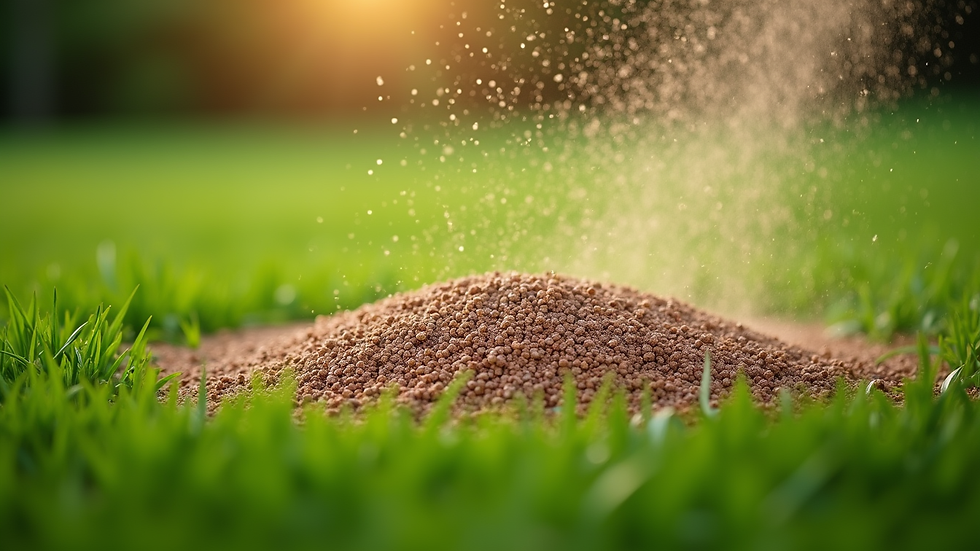
Granular Fertilizers: Easy to apply and provide slow, steady nutrient release.
Liquid Fertilizers: Fast-acting but may require more frequent applications.
Organic Fertilizers: Made from natural materials, improve soil health over time.
Understanding Fertilizer Labels
Fertilizer labels show three numbers, like 20-5-10. These represent the percentage of nitrogen (N), phosphorus (P), and potassium (K).
Nitrogen (N): Promotes leaf and blade growth.
Phosphorus (P): Supports root development.
Potassium (K): Enhances overall health and disease resistance.
For most lawns, nitrogen is the most important nutrient, but phosphorus and potassium are crucial during root development phases.
Soil Testing
Before choosing a fertilizer, consider getting a soil test. It tells you what nutrients your soil lacks and helps you pick the right formula. Many local extension offices or garden centers offer this service.
Tips for Applying Fertilizer Like a Pro
Applying fertilizer correctly is just as important as choosing the right product. Here are some tips to get the best results:
Use a spreader: A broadcast or drop spreader ensures even coverage.
Follow package instructions: Don’t guess the amount; over-fertilizing can harm your lawn.
Apply when grass is dry: This prevents clumping and uneven distribution.
Water after fertilizing: Helps nutrients soak into the soil.
Avoid windy days: Prevent fertilizer from blowing onto sidewalks or driveways.
By following these steps, you’ll maximize the benefits of your fertilization efforts.
Maintaining Your Lawn Beyond Fertilization
Fertilization is just one part of a healthy lawn routine. To keep your yard looking great year-round, combine it with these practices:
Regular mowing: Keep grass at the right height to promote strong roots.
Proper watering: Deep, infrequent watering encourages drought resistance.
Aeration: Reduces soil compaction and improves nutrient absorption.
Weed control: Remove weeds promptly to reduce competition.
Overseeding: Fill in bare spots to maintain a thick lawn.
By integrating these steps with your fertilization schedule, you’ll create a resilient, beautiful lawn that stands out in your neighborhood.
Your Path to a Thriving Lawn Starts Today
Mastering the perfect lawn fertilization schedule is a game-changer for any homeowner wanting a healthy, green lawn. With the right timing, products, and techniques, you can enjoy a yard that’s the envy of the block.
Remember, consistency is key. Stick to your schedule, adjust based on your lawn’s needs, and don’t hesitate to seek expert advice when needed. Your lawn will thank you with vibrant color and strong growth season after season.


Comments